April 15, 2026
Health and safety induction training is one of those things that every manufacturing and engineering organisation has to do — and most of them do in roughly the same way. New starters sit through a presentation, watch a video, sign a form to confirm they've understood it, and then head to the floor. Job done.
Except, of course, it often isn't. The research on knowledge retention from traditional induction formats is not encouraging, and the consequences of inadequate H&S training in industrial environments can be severe.
VR is changing how organisations approach this challenge — and the results are worth paying attention to.
The problem with classroom-based induction training isn't a lack of effort or intent — it's a fundamental mismatch between the format and the goal. H&S training exists to prepare workers to respond correctly in real situations. Sitting passively in a room, watching slides, is a poor way to build that kind of preparedness.
There's also the consistency problem. If your induction depends on a trainer delivering content live, quality will vary. A distracted group, a trainer running late, a new hire joining mid-session — any of these factors can degrade the experience in ways that matter.
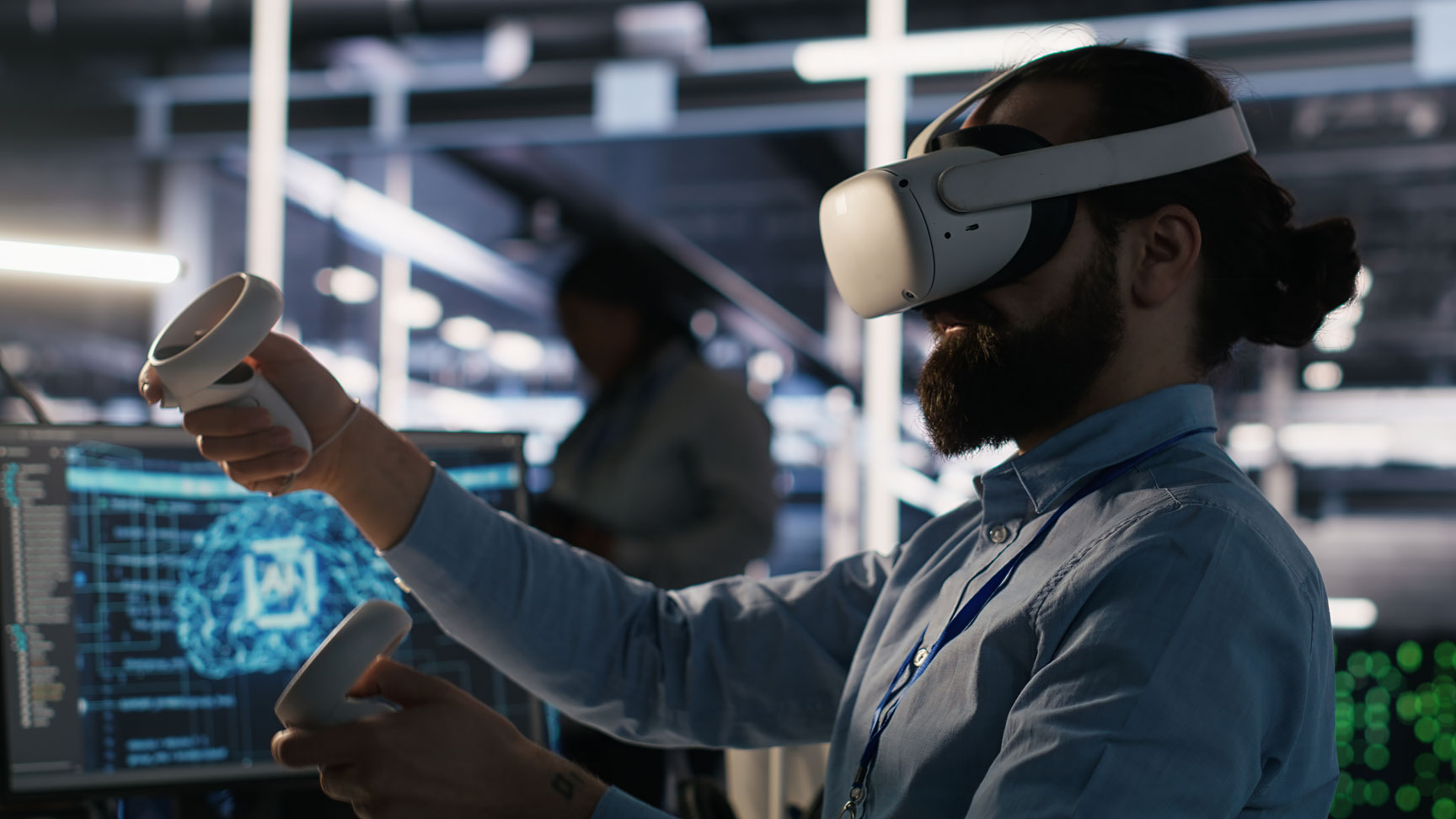
A well-built VR induction puts new starters inside a virtual version of their actual working environment. They walk the floor — virtually — before they set foot on the real one. They encounter the hazards specific to their site, practise the emergency procedures relevant to their role, and experience the consequences of unsafe behaviour in a space where nothing can actually go wrong.
It's engaging in a way that a PowerPoint presentation never will be, and it prepares workers for their environment rather than for a generic idea of what a manufacturing facility looks like.
Every new starter goes through exactly the same experience. Whether they join in January or July, whether they're based in your largest facility or a smaller satellite site, the training is identical. That consistency is a compliance advantage as well as a safety one — you can demonstrate that every member of your workforce has received the same standard of induction.
For organisations with multiple sites, traditional induction delivery is a logistical headache. Each site needs its own trained delivery resource, and coordinating consistent standards across locations is a significant management overhead.
VR induction modules can be deployed across sites without any of that overhead. The same module runs at every location, on demand, whenever a new starter joins. No scheduling challenges, no trainer availability issues, no inconsistency.
There's a perception that VR training is something only the largest organisations can afford. In our experience, that's not the case. For companies with regular recruitment, multiple sites, or high-risk environments, the economics of VR induction training compare very favourably to the ongoing cost of traditional delivery.
We work with manufacturing and engineering companies across the UK to build induction programmes that are specific to their environment, their procedures, and their people. If you'd like to understand what that could look like for your organisation, we'd be happy to talk it through.
Get in touch with ATXR to explore VR induction training for your workforce.


Bespoke VR & AR training simulations for manufacturing and engineering organisations.